Oh, You’re a Dog Trainer? Your Dogs Must Be Perfect.
“Oh, you’re a dog trainer? Your dogs must be so well trained.”
It’s usually said with a smile. Sometimes with a raised eyebrow. Occasionally while my own dog is doing something deeply unremarkable, like shouting at a hedge or pretending they’ve never heard their name before.
And this is where expectations get interesting.
Because when most people say well trained, what they usually mean is quiet, obedient, impressive. A dog who walks neatly, responds instantly, never embarrasses you in public and definitely doesn’t have opinions. A dog who looks good from the outside.
But that’s not actually what well trained means. At least, not in my world.
This blog is about what well trained really looks like in real life. Not on Instagram. Not in a competition ring. Not in a carefully cropped video where you don’t see the warm-up, the management, or the recovery afterwards. Real dogs. Real days. Real nervous systems.
Because here’s the quiet truth: a well trained dog is not a robot. They’re a learner. A thinker. A living, breathing animal doing their best in a human-shaped world.
And that matters.
Training that only values obedience tends to miss the bit underneath. The coping skills. The emotional regulation. The ability to settle, disengage, recover and try again. The stuff that doesn’t always look flashy, but makes life actually work.
I focus on life skills, not because obedience is bad, but because obedience without understanding is fragile. It falls apart under stress. It looks great until something changes. And life, as dogs know better than most, changes all the time.
A dog who can walk past another dog while sniffing the ground instead of exploding? That’s training.
A dog who can pause, think, and choose you over the environment — even if it takes a second? That’s training.
A dog who can say “this is a bit much” without being corrected or shut down? Also training.
You just won’t always get applause for it.
And then there’s comparison. Other people’s dogs. Other trainers’ dogs. Social media dogs who appear to exist in a permanent state of calm, focus and loose leads. When we compare our real, three-dimensional dogs to someone else’s highlight reel, we quietly move the goalposts. For ourselves. And for our dogs.
That comparison doesn’t motivate better training. It creates pressure. Shame. And a creeping sense that you’re doing it wrong.
You’re probably not.
So in this post, we’re going to slow the whole idea of well trained right down. We’ll look at what it actually means, why life skills matter more than polish, and why judging dogs — especially through a screen — tells us very little about the quality of their training or their welfare.
This isn’t about fixing your dog.
It’s about understanding them.
And yes. My dogs are well trained.
Just not in the way you might expect.
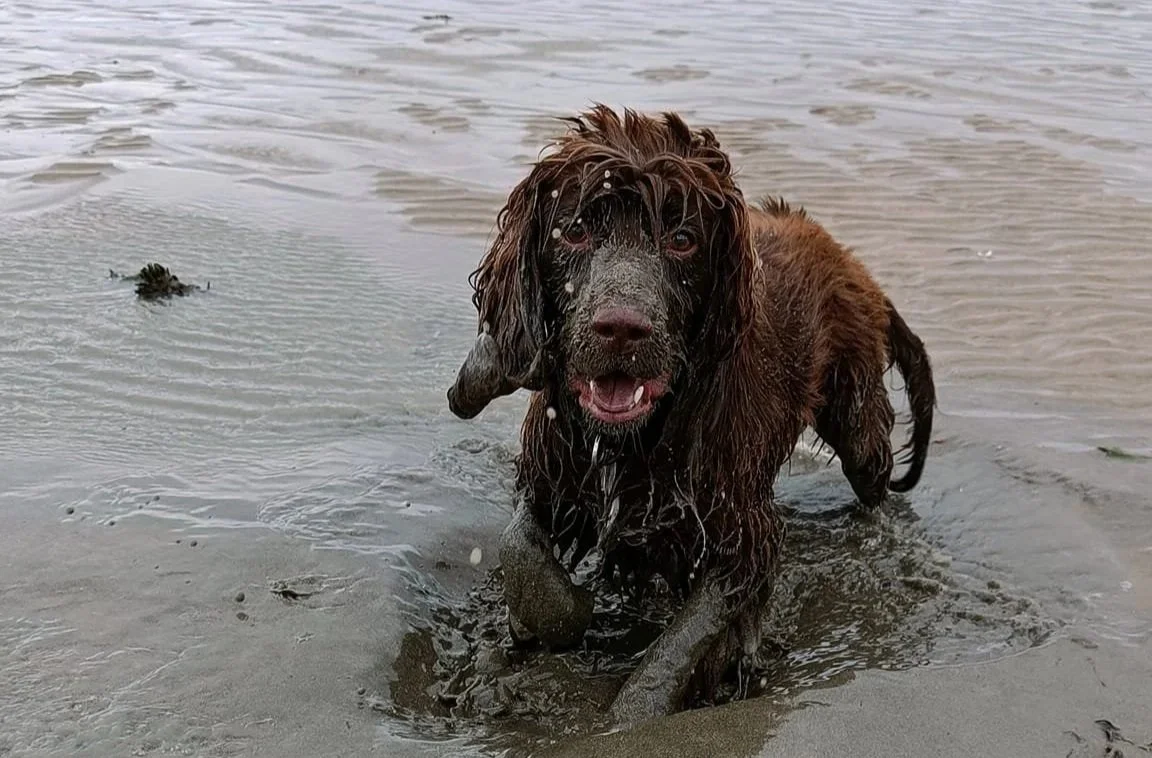
Callisto doing what Spaniels do best…
So, What Does “Well Trained” Actually Mean?
Let’s start by clearing the fog.
When most people say well trained, they’re usually describing what they can see:
walking nicely
sitting quickly
not making a fuss
In other words, behaviour that’s tidy, compliant, and socially acceptable.
But visible behaviour is just the surface. It’s the tip of the dog-shaped iceberg.
Training that only measures success by how a dog looks misses the part that actually matters: how the dog is coping underneath. Their emotional state. Their ability to process what’s going on around them. Their capacity to recover when something is hard.
A dog can be silent and still be overwhelmed.
A dog can be obedient and still be stressed.
A dog can look “good” while quietly holding it all together with their teeth.
So when I talk about a well trained dog, I’m not asking can they perform?
I’m asking can they cope?
A well trained dog has skills that work across contexts, not just in ideal conditions. They can think when something changes. They can disengage when they need to. They can come back to baseline instead of spiralling.
And yes, sometimes that means the behaviour doesn’t look impressive.
A dog sniffing the ground instead of staring politely at another dog? That’s information gathering and self-regulation.
A dog taking a second before responding? That’s processing.
A dog choosing distance over obedience? That’s communication.
From the outside, those moments are easy to misread. From the inside, they’re gold.
Instead of asking:
“Is my dog behaving?”
Try asking:
“Is my dog coping?”
Some practical signs you’re looking at real training, not just polish:
faster recovery after excitement or stress
softer body language
the ability to disengage without being told
fewer explosions, even if perfection never arrives
That’s the stuff that holds up on bad days. The stuff that actually improves quality of life - for you and for them.
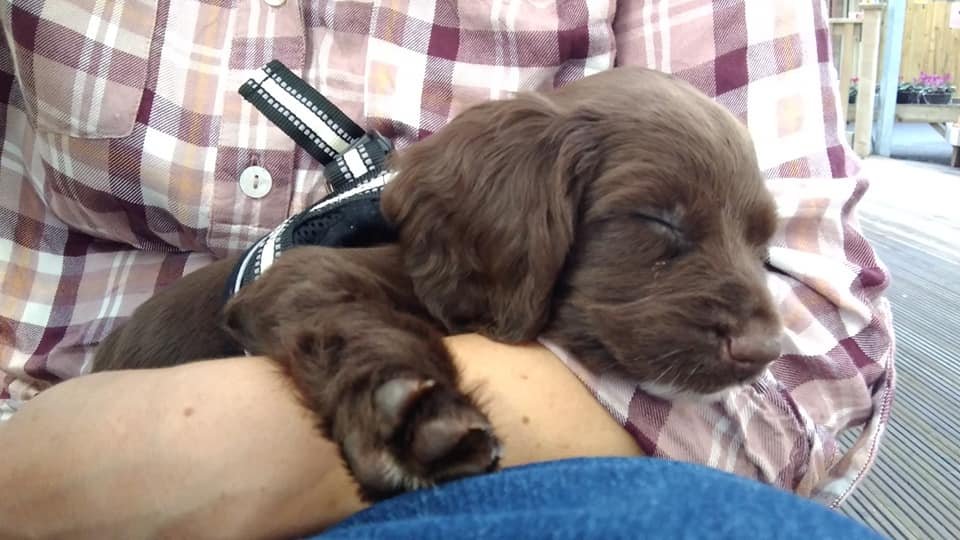
Callisto enjoying cafe life
Why I Train Life Skills, Not Robot Dogs
I train dogs for life.
Not for a demo.
Not for a perfectly timed sit.
And not for the kind of obedience that only works when nothing interesting, scary, exciting or inconvenient is happening.
Because real life is noisy. And messy. And full of feelings, squirrels, and badly timed surprises.
And I’ll be honest - I didn’t always train this way.
There was a time when I thought a well trained dog should be able to do a lot of behaviours, on cue, instantly. Sit. Down. Heel. Watch me. Calm on the lead. Focused at all times. The more cues a dog had, the more trained they were.
If you’re nodding along right now, good. Most owners are still right there.
That approach makes sense. It’s neat, measurable, and reassuring. If your dog can do lots of things on cue, it feels like you’re in control. Like you’re doing it properly.
What I started to notice, though, was that the dogs who looked the best weren’t always the ones coping the best.
They could perform.
They could hold it together.
But when the environment changed - when life got noisy or unpredictable - things unravelled fast.
That’s when I stopped asking what can they do?
And started asking how are they coping while they do it?
Life skills are flexible, not fragile.
That’s why I prioritise:
settling instead of constant stillness
disengaging instead of staring things down
sniffing and decompressing instead of heelwork everywhere
choice, not compulsion
These aren’t lower standards. They’re different ones.
And my non-negotiables are clear:
No pain.
No fear.
No intimidation.
One simple rhythm I come back to is work, reward, recover.
Not because dogs are shattered.
Because they’re satisfied.
If you’re still chasing drills, cues and constant focus, that’s okay. You haven’t failed. You’re just earlier in the process. Many people never get shown another option.
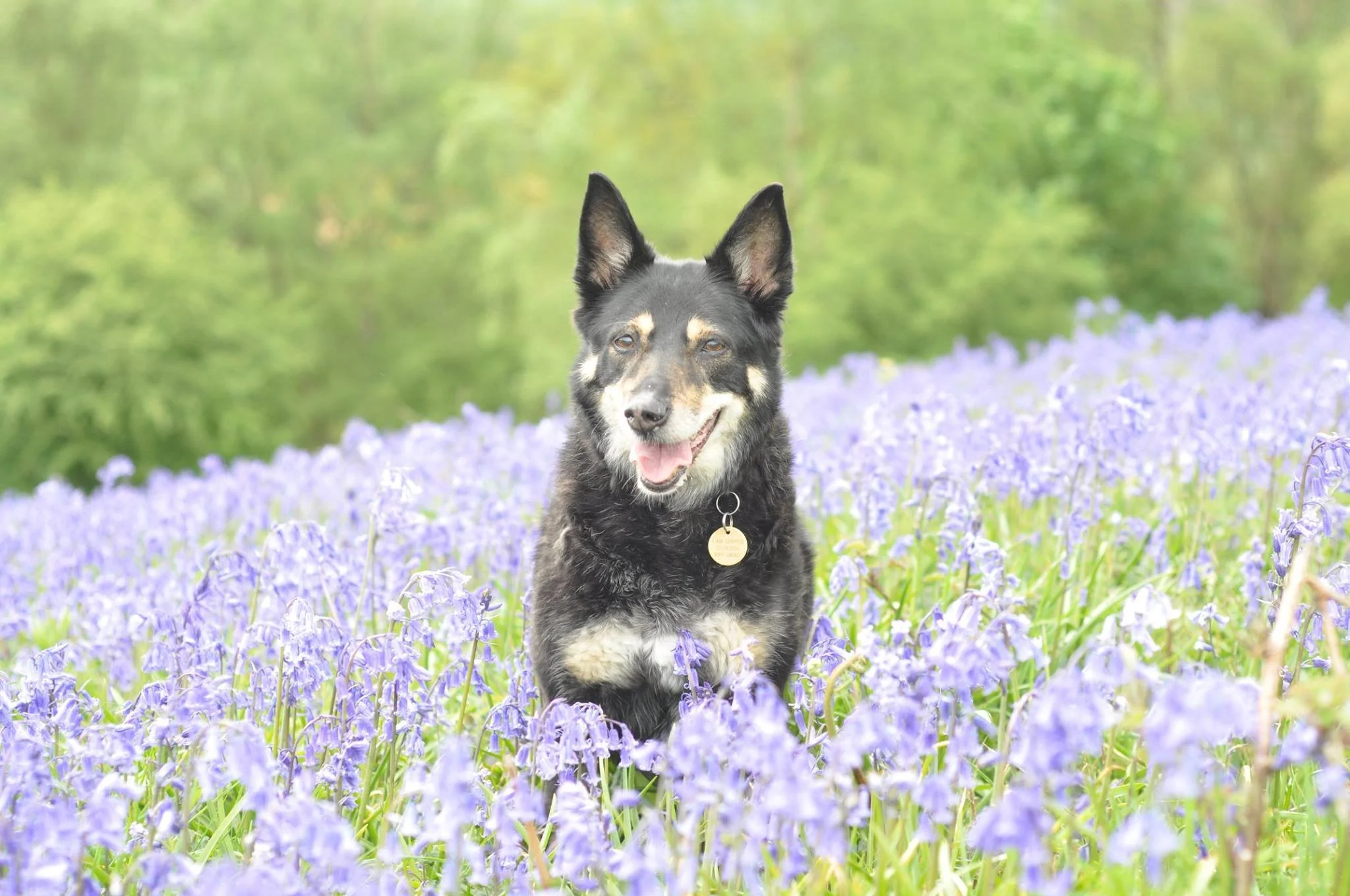
Lucy striking her most spring like pose for the fans
Why Comparing Dogs (Especially Online) Does More Harm Than Good
Comparison sneaks in quietly.
It shows up on walks.
It shows up online.
It shows up in that small, sharp thought: why doesn’t my dog look like that?
We compare our real dogs - on hard days, in busy places - to other people’s highlight reels. Carefully chosen moments where everything went right.
That’s not training reality. That’s editing.
Different dogs have different nervous systems, histories and thresholds. A dog who looks calm in one situation might unravel in another. A dog who struggles visibly might actually be doing something incredibly hard, incredibly well.
When we train for appearances, we risk pushing dogs past what they can cope with. Not because we’re cruel. Because pressure distorts judgement.
Social media rewards polish, not process. Stillness, not softness. Precision, not recovery.
So instead of comparing, look for change:
quicker recovery
shorter reactions
more disengagement
more softness
more choice
Progress doesn’t need an audience.
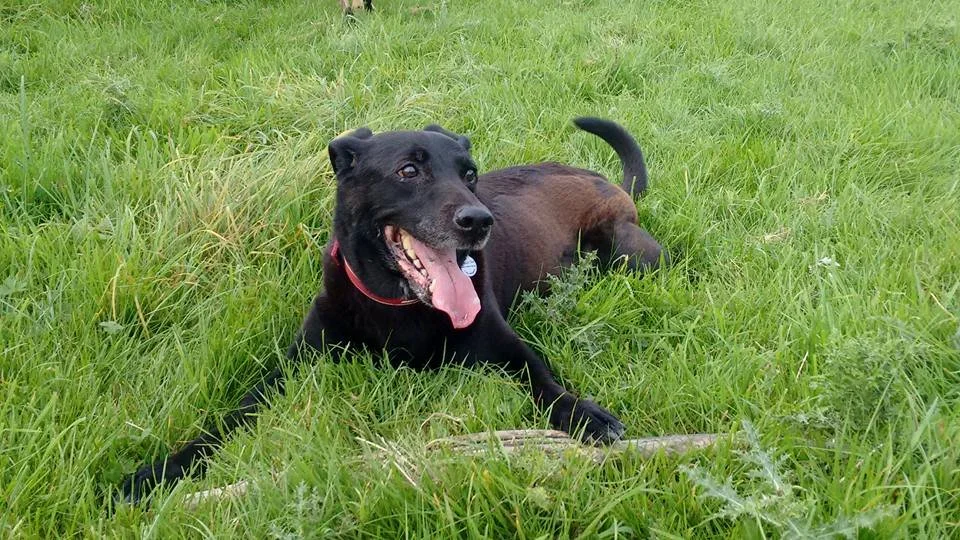
Jim ready for action
And This Shows Up in Classes Too
Training halls and demo dogs have a lot to answer for.
Group classes are often treated as the gold standard - the place where “proper” training happens. Rows of dogs. Close proximity. Everyone watching. If your dog can’t cope there, it’s easy to assume the problem is you. Or them.
But hall training isn’t neutral.
Bright lights. Other dogs. Noise. Human pressure. Expectation. For some dogs, that’s fine. For others, it’s overwhelming before learning has even started.
A dog who struggles in a class setting isn’t untrainable. They’re often just over threshold.
The same goes for demo dogs. They’re not average. They’re chosen and conditioned for that role. That doesn’t make them better dogs - it makes them suitable for public performance.
Not all dogs do well in groups.
Not all dogs learn best in busy environments.
And not all good training happens in a hall.
Some dogs need one-to-one work. Some need quieter spaces. Some need distance, breaks, and time before learning can even begin.
That’s not a failure of training.
That is training - adapted to the dog in front of you.
Progress still counts when nobody else is watching.
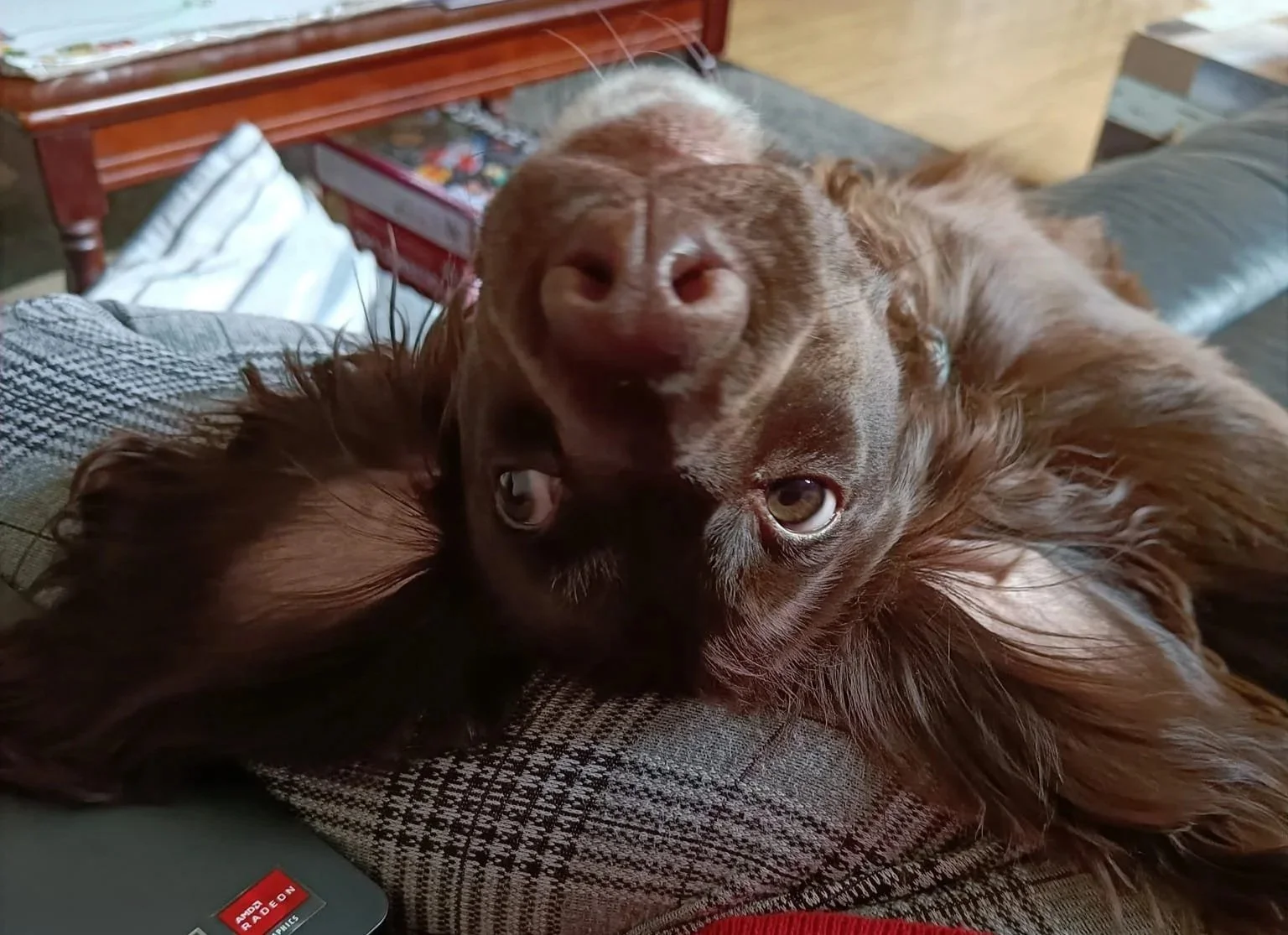
Callisto being a Spaniel - the world looks better upside apparently.
So… Are My Dogs Well Trained?
Yes. They are.
They’re not perfect. They don’t exist to make me look competent. They don’t perform on demand at all times.
But they can cope.
They can recover.
They can disengage.
They can communicate instead of shutting down.
They can live in the real world without being pushed through it - whether that’s on a walk, online, or in a training class that just isn’t right for them.
That’s what well trained means to me.
If you’ve been chasing perfect walks, calm group classes, instant responses and tidy behaviour - you’re not behind. You’re not failing. You’re just doing what most people are taught to value.
There is another option.
One that centres welfare.
One that prioritises understanding over appearances.
One that adapts the training to the dog, not the other way around.
This isn’t about fixing your dog.
It’s about supporting them properly.
And if this has given you permission to exhale - to stop comparing, stop forcing, and start noticing coping - that’s the real win.
No pressure.
Just honesty.
And dogs who are allowed to be dogs.
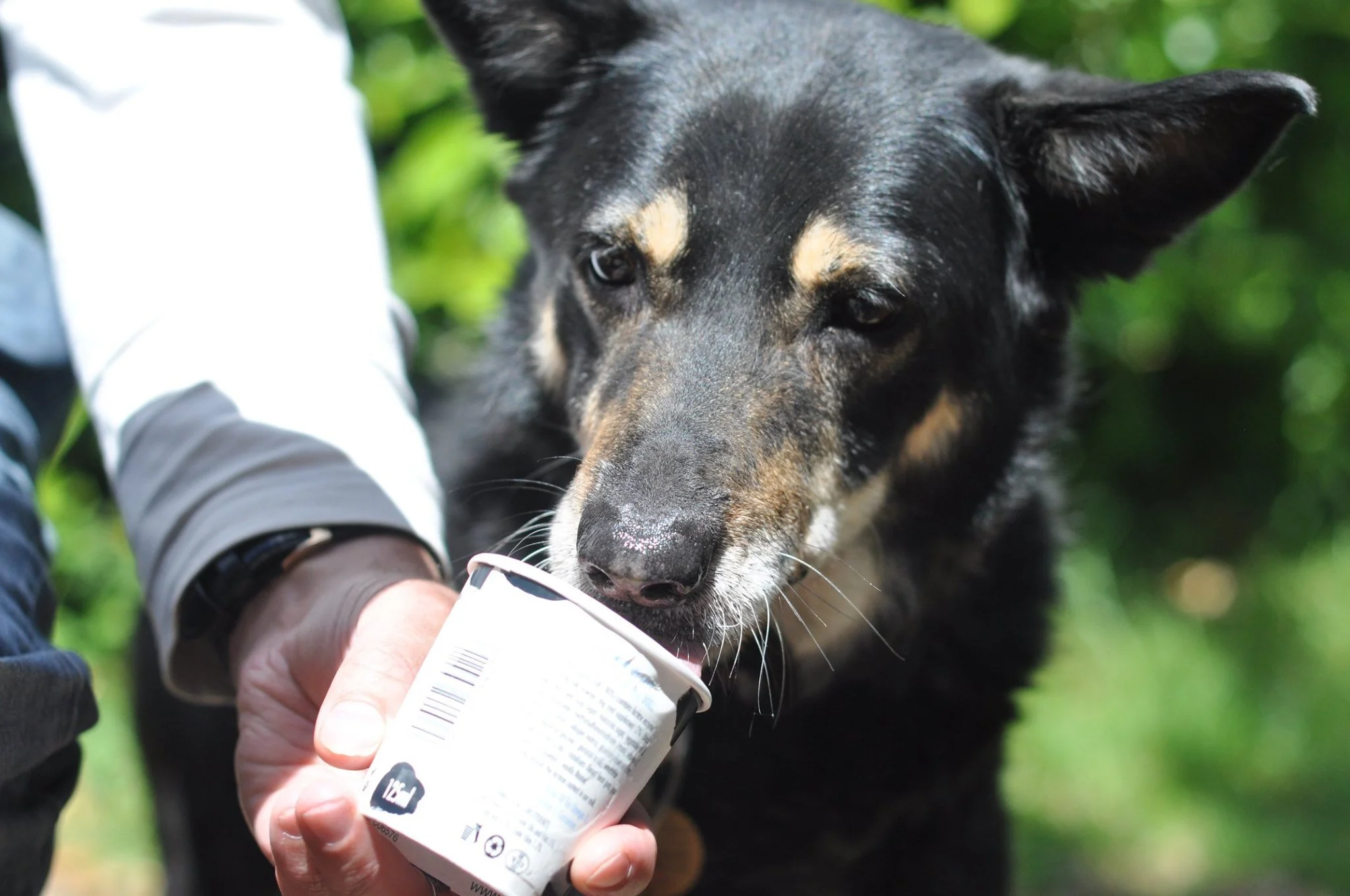
Lucy eating dog ice cream