
Ricochet Dog Training Code of Ethics
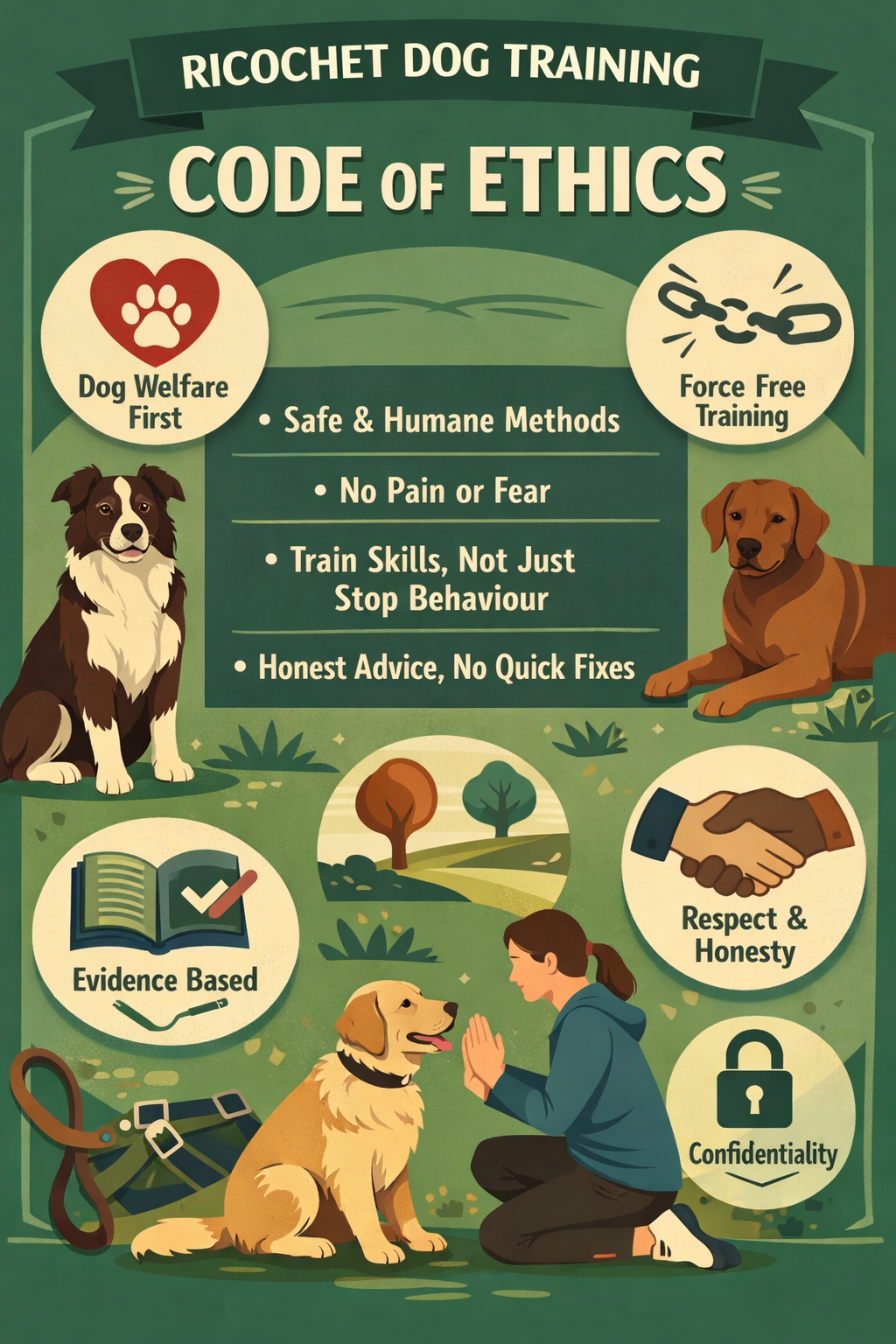

Dog welfare comes first
Your dog’s physical and emotional wellbeing is the priority at all times. If a training approach causes fear, pain, panic, or shutdown, it is not acceptable and it will not be used.
Force free, always
I do not use punishment, intimidation, or pain to change behaviour. This includes choke chains, slip leads used for corrections, prong collars, shock or spray collars, leash pops, flooding, verbal threats, or dominance based handling.
Training, not suppression
I focus on teaching dogs what to do, not just stopping behaviour people dislike. That means building skills, confidence, and better choices through reinforcement, clear setups, and gradual exposure.
Evidence based and honest
My methods are grounded in modern behavioural science and current welfare standards. I continue to learn and update my practice as evidence evolves. I do not promote pack theory, alpha narratives, or quick fix promises.
Real life matters
Training is designed around your dog, your environment, and your daily life. We work on what is actually relevant. If something does not serve your dog, we do not waste time on it.
Consent and communication
You will always know what we are doing and why. You can ask questions, pause an exercise, or say no. Your dog’s body language and stress levels guide the pace of training.
Safety is non negotiable
I will prioritise safety for dogs, people, and the wider public. I may recommend management tools such as harnesses, long lines, muzzles, distance, or controlled environments where appropriate. Management keeps everyone safe while learning takes place.
Appropriate equipment
I recommend equipment that supports learning without causing pain or fear. I will show you how to fit and use it correctly. If equipment is masking a problem rather than teaching skills, I will explain that clearly.
Staying within scope
Some behaviour concerns require veterinary input or a clinical behaviourist. If a case is outside my scope, I will be honest and refer you on. I will not oversimplify complex issues.
No shame, no blame
Dogs are not being difficult on purpose. People are not failing because training feels hard. You will not be judged for past choices or current struggles.
No guarantees
Dogs are individuals shaped by genetics, history, environment, and learning opportunities. I do not offer guarantees, timelines, or identical outcomes. Progress is built through consistency, practice, and support.
Professional standards
I work insured, prepared, and within a force free, welfare first framework. I maintain professional development and relevant qualifications and keep appropriate records.
Respect for others
I do not criticise other professionals for sport. If advice you have received is unsafe or unhelpful, I will explain why and offer an alternative.
Privacy and consent
Your personal information and training details are treated as confidential. Photos or videos are only taken or shared with your permission. Your access to training never depends on social media content.
Client responsibilities
You agree to follow safety guidance, use equipment as advised, and be honest about health, bite history, and any risks. Training works best when we are both working with full information.
Ending or pausing sessions
I may pause or stop a session if your dog is too stressed to learn safely, if anyone is at risk, or if force based methods are requested. If that happens, we will move to a safer plan.