Modern Dog Training Deserves Better Than This
I read a recent Guardian article about one owner's journey through the chaos of living with a young boxer.
It will resonate with plenty of people. The frustration. The embarrassment. Wondering why your dog seems incapable of making sensible decisions. Feeling like everyone else has somehow worked it out except you.
There is plenty in the article I agree with.
Dogs aren't trying to dominate us.
Punishment doesn't teach understanding.
Owners deserve support rather than judgement.
But once I'd finished reading it, I couldn't help feeling it had missed an opportunity. Not because the advice was necessarily wrong. Because it was incomplete. And incomplete advice often creates another generation of owners chasing control instead of understanding.
This isn't where modern dog training started
The article gives the impression that reward based training is a relatively modern shift, largely represented by one school of thought.
It isn't.
The profession has been shaped by decades of behavioural science, learning theory and practical experience. Karen Pryor. Bob Bailey. Marian Breland Bailey. Susan Friedman. Kay Laurence. Veterinary behaviourists, ethologists and researchers who spent careers improving our understanding of how animals learn.
No single trainer represents modern dog training.
The profession has continued to evolve and it will hopefully keep evolving.
Modern dog training is much bigger than treats
If you asked the average dog owner what force free training looked like, I suspect many would say "lots of treats." That isn't surprising. It's the picture that's often painted. The article reinforces exactly that narrative. Better food. Higher value food. More chicken. Food is useful. Sometimes it's brilliant. Sometimes it's exactly what the dog needs.
But it isn't what modern dog training is built on.
Dogs value different things at different times. Access to sniffing, space, play, exploration, choice. Even simply removing pressure can be reinforcing. Good trainers don't spend their careers looking for more expensive treats. They spend their time working out what matters to the dog standing in front of them.
That is a very different conversation.
The world cannot always be controlled
One message that kept appearing throughout the article was avoiding situations you can't control. At first glance that sounds sensible. Sometimes it is. If your dog cannot cope, management matters. It prevents rehearsal. It protects welfare. It keeps everyone safe.
But management isn't the destination. It's where we begin.
Dogs don't live in carefully managed training sessions. They live in housing estates, village high streets, parks, cafés, schools, forests. Places full of unpredictable people, dogs, wildlife and noise. If we spend our lives trying to remove uncertainty, we never actually prepare dogs for uncertainty.
The goal isn't to avoid life. The goal is to help dogs become capable of coping with it.
The dog in front of you matters more than the breed
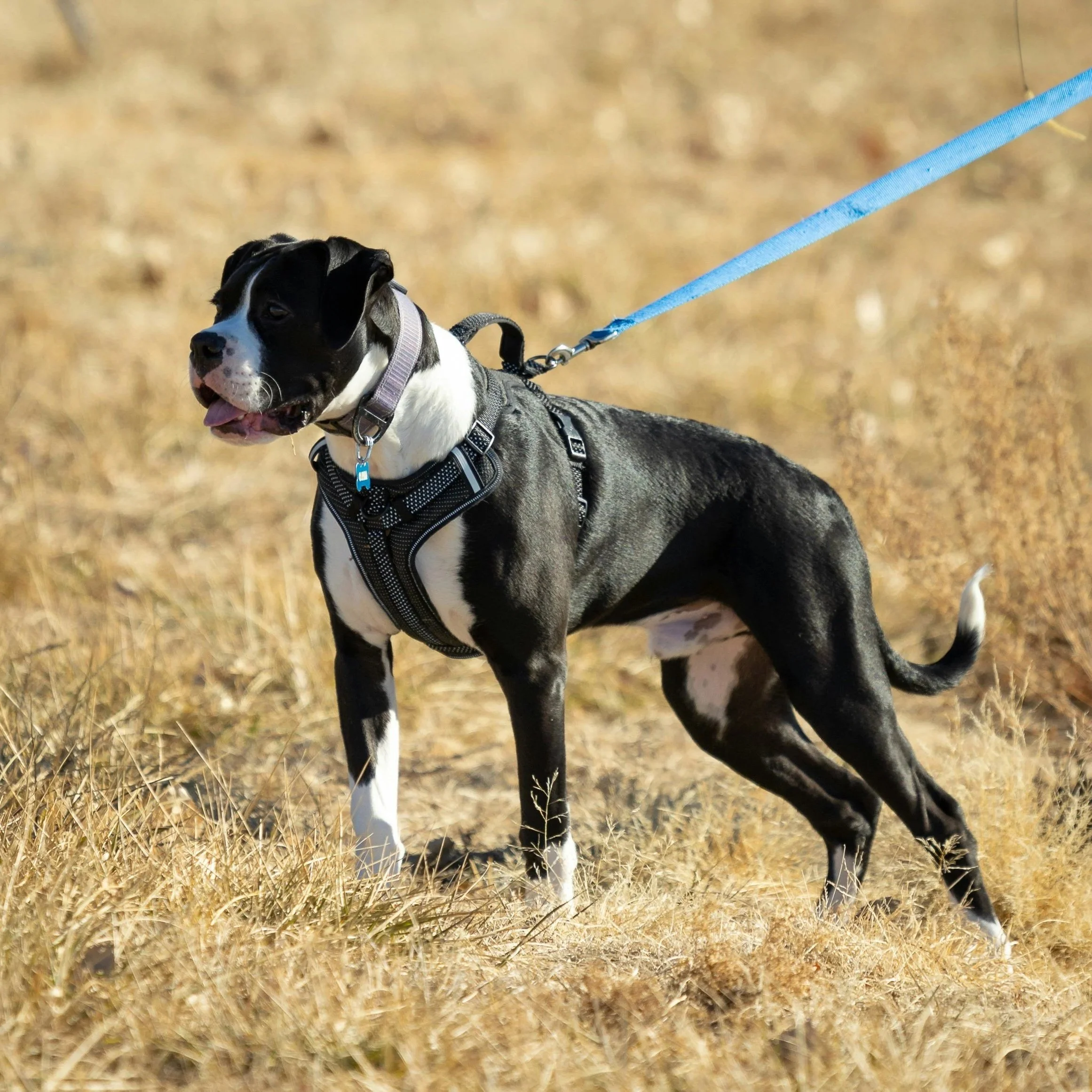
One point in the article made me pause. The suggestion that Boxers are one of the breeds with the poorest impulse control. It's the kind of statement that sounds convincing because it fits a stereotype.
Boxers are often described as bouncy, excitable and slow to mature. Many owners will recognise those traits. But recognising a tendency isn't the same as explaining an individual dog's behaviour, and that distinction matters more than people realise.
Breed influences behaviour. It doesn't dictate it.
A Border Collie is more likely to orient to movement. A Labrador is more likely to carry things. A Terrier is more likely to persist. A Boxer may well have higher levels of social enthusiasm and physical exuberance than some other breeds.
Those are tendencies. Not diagnoses.
What concerns me is when owners begin to believe their dog's behaviour is simply because they're a Boxer. The conversation stops there. No one asks why that individual dog struggles in that particular situation.
Is it frustration? Over arousal? Poor emotional regulation? Lack of sleep? Pain? Uncertainty? Has the dog actually been taught the skills they're expected to use?
Those questions matter far more than the breed label.
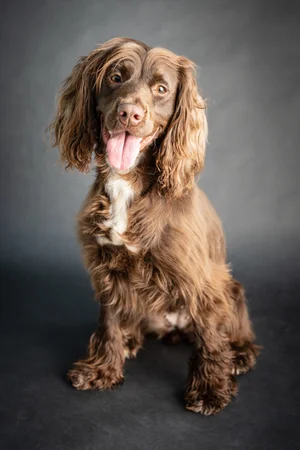
I've met wonderfully calm Boxers. I've met Labradors that struggled enormously with impulse control. I've met Working Cockers that could settle beautifully and others that found it incredibly difficult.
Breed gives us useful context about what a dog may have been selected to do. It doesn't tell us who that individual dog is. And any dog can be too much for the wrong owner in the wrong situation. There's no such thing as a guarantee based on breed alone.
We should be careful not to let breed stereotypes become explanations. They're a starting point, not a conclusion.
Focus has become overrated
Another theme running through the article is engagement. Teaching dogs to look at us. To ignore everything else. To remain focused on the handler. There is absolutely a place for that. I teach engagement. I teach recalls. I teach emergency stops. I teach behaviours that keep dogs safe. But I don't want dogs spending their lives looking at me. I want them looking at the world. Watching. Listening. Processing. Making sense of what's happening around them.
Dogs are sentient beings. They aren't robots waiting for their next instruction.
Somewhere along the way we decided that eye contact means a dog is listening. That if they're looking at us, they're engaged. That attention and connection can be measured by where a dog points their face.
It can't.
A dog can hold eye contact and be completely overwhelmed. They can stare at you because they've learnt that's what makes the discomfort stop, not because they feel safe, not because they're learning anything, but because it works as an exit route. That isn't engagement. That's avoidance wearing a different coat.
If every potentially difficult situation is met with another cue, another behaviour or another request for eye contact, we've managed the behaviour. We haven't necessarily supported the emotion driving it.
Has the dog learnt that the cyclist isn't a threat? Or have they simply learnt to maintain eye contact until the cyclist disappears? Has the dog learnt that another dog is safe? Or have they learnt to perform a hand touch while desperately trying not to look?
Those aren't the same thing.
Behaviour can change long before emotion does.
That matters. As trainers, we shouldn't confuse the two.
Dogs need time to think
One of the biggest things I think we've lost is the value of simply allowing dogs to process information. Not flooding them. Not abandoning them. Supporting them.
Giving them enough distance to observe. Allowing them to gather information. Helping them discover that the world is often far less frightening, exciting or overwhelming than they first imagined.
Confidence isn't something we train with cues. Resilience isn't built by asking for another sit. Those things develop through experience. Supported experience. The sort where the dog is allowed to think rather than constantly being told what to do.
We need to stop measuring success by control
Control matters. Reliable recall matters. Lead walking matters. Safety matters. But they're tools. Not the destination.
The dog who walks perfectly to heel while feeling anxious hasn't succeeded. The dog staring into their owner's eyes while desperately avoiding looking at another dog hasn't necessarily learnt anything.
The dog who can calmly observe, process what they're seeing and make sensible decisions without constant direction is the dog I'm interested in helping create.
Because life doesn't come with a trainer standing beside you giving cues every few seconds. Eventually our dogs have to live in the real world.
Our job isn't to control every decision they make. It's to help them become capable of making good ones.