Hot Weather Dog Walks Are Not That Simple

Another heatwave. Another round of pitchforks at dawn.
Someone sees a dog outside in warm weather and suddenly the comment section turns into a court room. People start quoting numbers. 18°C. 22°C. 25°C. “No dog should be out in this.” “You should know better.” “People like you shouldn’t own dogs.”
And, as usual, the dog gets lost in the argument.
Can I walk my dog in hot weather? The honest answer is: it depends.
That is not the same as saying heat is harmless. It is not the same as saying dogs do not die from heat injury. They absolutely can, and they do.
Heat-related illness can become life-threatening quickly, and current veterinary guidance is clear that if a dog is overheating, owners should act immediately, cool first, transport second, and seek veterinary advice. The RVC’s heatstroke guidance says owners should not delay cooling a pet they are worried is overheating.
But taking heat seriously does not mean pretending every dog, every walk, every humidity level, every surface, every owner, every breed, every coat type and every level of fitness can be reduced to one magic number on a Facebook infographic.
As an ABTC ATI, I have no interest in encouraging anyone to take risks with their dog’s welfare.
Quite the opposite.
My job is to help owners understand the dog in front of them, recognise when something is becoming unsafe, and make better decisions before things go wrong. That matters because heat tolerance is not one-size-fits-all.
I have a working gundog who can work her socks off all day on a shoot in unseasonably warm weather, with the right management, conditioning and monitoring, and be absolutely fine.
I also have a cockapoo who starts struggling as soon as the sun gets a bit enthusiastic.
Same owner.
Same awareness.
Same commitment to welfare.
Different dogs.
So no, this blog is not going to tell you to ignore heat warnings and crack on regardless.
That would be stupid.
It is also not going to tell you that every dog seen outside during a heatwave is automatically being neglected.
That is lazy.
What we need is less judgement, less social media shaming, and more understanding of the many factors that influence heat risk: the dog, the activity, the humidity, the “feels like” temperature, acclimation, conditioning, hydration, intensity, environment and whether the owner is actually paying attention.
Because dogs deserve better than panic dressed up as advice.
They also deserve better than owners winging it.
The useful conversation is somewhere in the middle.
The Problem With Quoting Temperatures
Temperature matters.
Of course it does.
Nobody sensible is saying that 30°C in full sun is the same as 12°C on an overcast morning. Heat is a real environmental stressor, and dogs do not cool themselves in exactly the same way we do.
But temperature on its own is not the whole risk assessment. That is where a lot of online advice falls apart.
People love a simple number because it feels clear. It feels decisive. It gives them something easy to share, repeat and enforce.
But dogs are not spreadsheets. A thermometer does not know whether your dog is young or old. It does not know whether your dog is lean, overweight, fit, unfit, acclimated, anxious, flat-faced, double-coated, dark-coated, recovering from illness or previously affected by heat injury. It does not know whether your dog is sniffing slowly in the shade for ten minutes or sprinting after a ball like their life depends on it.
It does not know:
whether there is a breeze.
whether the ground is hot.
whether the air is humid.
And humidity matters because dogs rely heavily on evaporative cooling through panting. When the air is humid, evaporation becomes less efficient, which can make it harder for a dog to offload heat. That does not mean temperature is irrelevant. It means it is one part of the picture.
This is one of the key points that comes through again and again in working dog heat injury education: ambient temperature alone is not enough. “Feels like” temperature, solar radiation, airflow, humidity, surface temperature, workload and the individual dog all change the risk.
A dog trotting steadily in the shade is not experiencing the same heat load as a dog doing repeated retrieves, chasing a ball, working cover, running canicross or hiking uphill in direct sun.
Those are not the same activity.
They are not the same risk.
So when people ask, “can I walk my dog in hot weather?”, the better question is:
Can I walk this dog, in these conditions, doing this activity, with this plan, today?
That is not a cop-out. That is risk assessment.
Stop asking only “what temperature is too hot?” and start asking “what is too much for my dog, today?”
Your Dog Matters More Than the Number
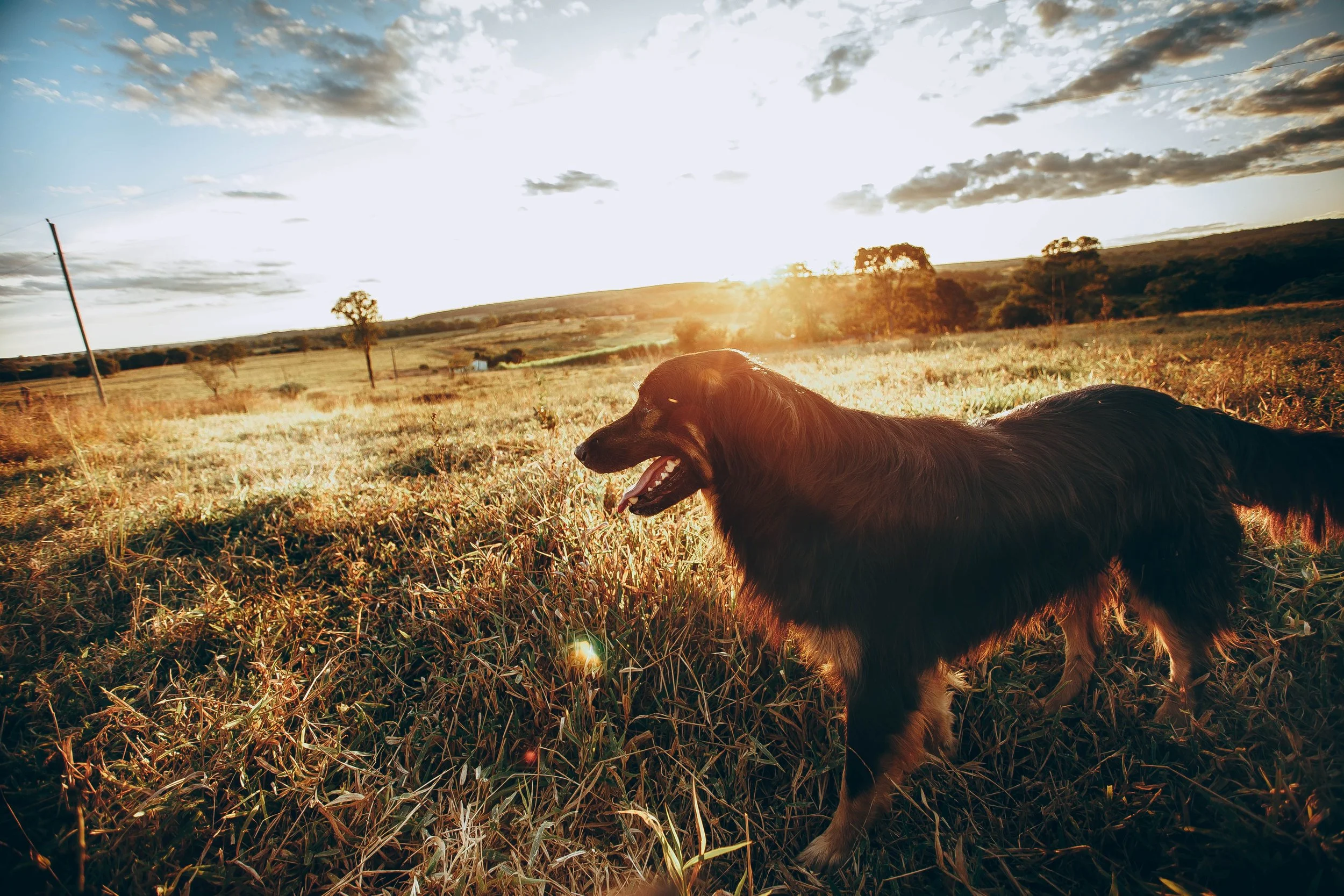
One of the most frustrating things about hot weather arguments is how quickly people ignore individual dogs. Breed matters. But breed is not destiny.
A brachycephalic dog may be at greater risk because of restricted airways. A heavy, unfit or overweight dog may struggle sooner. A dog with heart or respiratory disease may have less margin for error. Older dogs, puppies and dogs with previous heat injury may need much more caution.
But even within the same breed, there can be huge variation.
Two Labradors are not automatically the same dog.
Two spaniels are not automatically the same dog.
Two cockapoos are absolutely not automatically the same dog.
Genetics, fitness, coat, body condition, health, drive, nerves, hydration, acclimation and previous experience all matter. So does the dog’s personality. Some dogs will self-regulate beautifully. They slow down, seek shade, stop hunting, lie in water and tell you very clearly that they have had enough.
Other dogs will work until they fall over. That is not because they are brave. It is not because they are “built different”. It is because arousal, drive and motivation can override sensible behaviour.
This is where owners and handlers have a responsibility to know the dog in front of them.
My working gundog and my cockapoo are a good example.
My gundog is conditioned for work. She has a job. She has a level of fitness, exposure and management behind her. I know how she moves, how she pants, how she recovers, how she looks when she is coping and how she looks when I need to change the plan. That does not make her invincible. It just gives me information.
My cockapoo is different. She can struggle much sooner. She does not have the same tolerance, the same conditioning or the same ability to deal with warmth. If I treated her like my gundog, I would be failing her.
Same household. Different dogs. This is why blanket advice can become unhelpful.
Not because caution is bad. Caution is good. But when advice becomes so simplistic that it ignores the dog, it stops teaching owners how to think. It teaches them to obey or rebel. Neither of those is good enough.
Learn your dog’s normal:
Normal panting.
Normal recovery.
Normal movement.
Normal enthusiasm.
Normal tongue shape.
Normal choices.
You cannot spot abnormal if you do not know what normal looks like.
Activity Changes Everything
The walk is not just “a walk”. That is another problem with the online debate. Someone says they are taking their dog out and people imagine the worst version of that: midday, full sun, tarmac, no water, no shade, dog dragging behind, owner oblivious.
Sometimes, yes, that happens. And it should be challenged.
But a five-minute toilet break is not the same as an hour of ball throwing.
A slow sniffy walk is not the same as a run.
Trotting is not the same as sprinting.
A shaded woodland wander is not the same as marching across open fields.
Working a dog is not the same as letting a dog mooch.
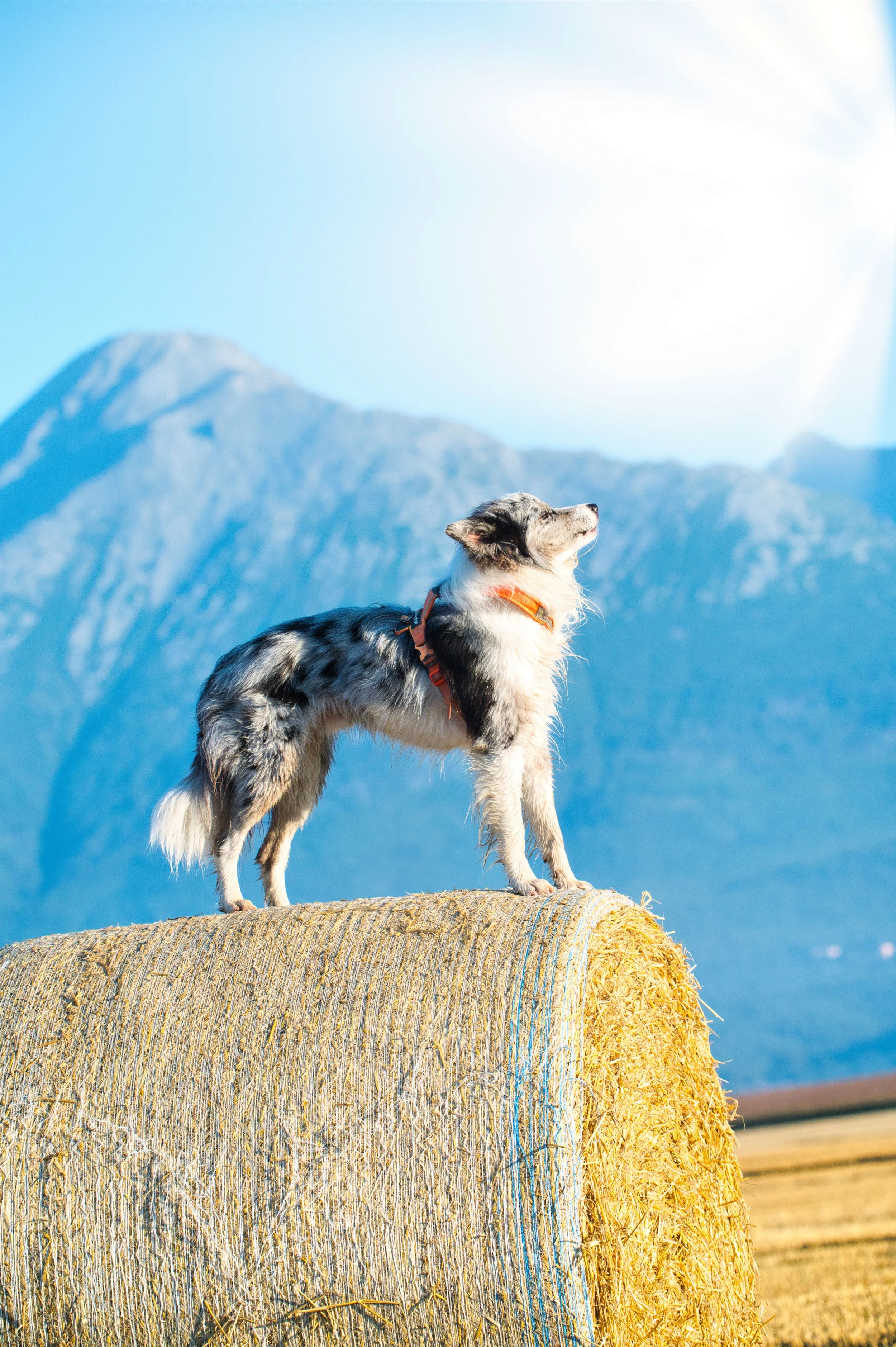
Heat does not only come from the weather. Dogs generate heat internally when they work. The harder the work, the more heat they produce. Intensity can matter as much as the number on the forecast. This is why repeated ball throwing can be such a problem in warm weather.
It is not just the sun. It is the acceleration, braking, turning, chasing, arousal and repetition. It is the dog going from zero to one hundred, again and again, often with very little awareness from the human holding the launcher. The dog may still look keen. That does not mean the dog is coping.
High-drive dogs can be particularly vulnerable because they may not make good decisions for themselves. They may continue because the work is rewarding, even when their body is struggling. This is where “but he still wanted to play” is not good enough. Dogs want lots of things that are not safe. That is why we are supposed to be the adults in the relationship.
A dog who can manage a calm early morning walk may not manage chasing a ball in the same temperature. A dog who can work in warm weather with conditioning, breaks, water, shade and an experienced handler may not manage a sudden high-intensity session after weeks of doing very little.
Fitness matters.
Acclimation matters.
A dog who has gradually adjusted to warmer weather may cope differently to a dog hit with a sudden warm spell after months of cool conditions. That does not mean acclimated dogs cannot suffer heat injury. They can. It means the risk picture changes.
Dr Janice Baker’s work on canine heat injury in working dogs is useful here because it specifically challenges over-simplified approaches and highlights that working dogs are not always directly comparable to companion dogs in how heat injury prevention, recognition and management should be considered. Her critical review also points out that much heat injury guidance has historically relied on limited direct evidence, especially for immediate field management in specialist working dog populations.
That matters because it reminds us to be careful with certainty.
We should be cautious.
We should be prepared.
We should not pretend we know everything from one photograph and a weather app screenshot.
In warm weather, reduce intensity before you obsess over duration. Less running. Less chasing. Less arousal. More shade, sniffing, water, rest and choice.
Heat Risk Is Real
This is the part that cannot be softened. Heat injury is real. Heatstroke is real. Dogs can die.
That is not scaremongering. That is the reason this conversation matters in the first place.
The danger is not just “being a bit hot”. Heat-related illness can progress, and body temperature can continue to rise even after activity stops if the dog is not cooling effectively.
Owners need to recognise early changes, not wait for collapse.
Signs that should make you stop and reassess include:
Panting that is excessive for that dog
A change in tongue shape, colour or control
Slowing down or lagging behind
Seeking shade or stopping
Restlessness or inability to settle
Glazed eyes or a “not quite with you” expression
Weakness, wobbliness or poor coordination
Vomiting, diarrhoea, collapse or seizures
Not every hot dog is in heatstroke. But every dog showing concerning signs deserves to be taken seriously.
The goal is not to wait until it becomes an emergency. But to notice early and act early.
That might mean:
turning round.
sitting in shade.
getting the dog wet.
stopping the activity completely.
calling the vet.
And yes, cooling matters.
The outdated advice to avoid cold water has caused confusion for years. Current evidence supports rapid cooling for dogs with heat-related illness, with cold-water immersion recognised as the recommended method for young, healthy dogs, and evaporative cooling (water applied with air movement) recommended for older dogs or those with underlying health conditions. Research using UK primary care data found that cooling before transport is strongly advised, and the 2016 Vet-COT best practice guidelines for prehospital care also emphasise "cool first, transport second," using water rather than delaying through fear of doing the wrong thing. (Hall et al., Veterinary Sciences, 2023; Hanel et al., Journal of Veterinary Emergency and Critical Care, 2016)
That does not mean every warm dog needs to be treated like a collapsed heatstroke case.
It means owners need to know the difference between prevention, early management and emergency response.
Prevention is planning the walk sensibly.
Early management is stopping when the dog is showing signs of struggling.
Emergency response is cooling immediately and seeking veterinary help when heatstroke is suspected.
Those are not the same thing. But they all require owners to pay attention.
Have a cooling plan before you need one. Know where the shade is. Know where water is. Carry water. Know how to cool your dog. Know where the nearest vet is if you are travelling.
Better Decisions in Hot Weather
Good hot weather management is not dramatic. It is usually boring. That is a compliment. It looks like changing the route.
Going earlier.
Going later.
Doing less.
Choosing shade.
Letting the dog sniff.
Skipping the ball.
Leaving the bike at home.
Stopping before the dog is cooked.
It looks like checking the dog in front of you rather than the version of the dog you wish you had.
It also looks like being willing to change your mind.
That is a big one.
You may leave the house thinking the walk is reasonable. Then the sun comes out, the breeze drops, the humidity climbs, your dog starts panting harder than expected, or the ground feels warmer than you thought. At that point, the good decision is not to prove a point.
The good decision is to adapt.
Turn round.
Cut it short.
Find water.
Sit in shade.
Go home.
Try again another day.
That is not failure. That is good handling.
Some practical questions I would rather owners ask are:
What is my dog like in this weather normally?
Has my dog had time to acclimate?
How fit is my dog really?
What activity am I planning?
Is there shade?
Is there airflow?
Is it humid?
What surface are we walking on?
Can I cool my dog if needed?
Am I willing to stop, even if I planned to do more?
That final question matters.
Because if the answer is no, you do not have a plan. You have an agenda. Dogs need us to be flexible.
The working dog world talks a lot about knowing your dog, and for good reason. Handlers who work dogs in demanding environments cannot rely on generic rules alone. They need observation, preparation and the confidence to stop when the dog in front of them says the plan needs to change.
Pet dog owners need the same skill. Not because every pet dog is a working dog. But because every dog deserves to be read properly.
The safest owners are not the ones who memorise the most internet rules. They are the ones who can look at their own dog, understand the conditions and change the plan without ego.
Good Owners Need Support, Not Public Shaming
There is a difference between education and humiliation. We seem to forget that every summer.
A person posts a photo of their dog outside and within minutes strangers are calling them abusive, neglectful, selfish or stupid. Sometimes the situation may genuinely be unsafe. Sometimes someone may need to step in.
But a lot of what happens online is not education. It is performance. It is people proving they care about dogs by being cruel to humans.
That does not make dogs safer. It makes people defensive. It makes people ashamed. It makes people less likely to ask questions. It makes them hide mistakes rather than learn from them.
And that is a welfare problem.
If the goal is genuinely to protect dogs, then the conversation needs to help people make better decisions.
“Are you able to get into shade?”
“Is there water nearby?”
“Do you know the early signs of heat stress?”
“Could you swap the ball throwing for a sniffy walk?”
“Have you got a plan to cool your dog if needed?”
That is useful.
“You shouldn’t own a dog” is not.
Support is not the same as letting everything slide and understanding is not the same as having no standards. We can be clear about risk without turning every conversation into a public punishment. In fact, we have to be.
Because most owners are not trying to harm their dogs.
Most are trying to do their best with the information they have.
Some have poor information.
Some have outdated information.
Some have been scared by conflicting advice.
Some have been told never to use cold water.
Some have been told never to walk over a certain temperature.
Some have working breeds who need more thoughtful management than “just don’t do anything all summer”.
Some have dogs who cannot cope with what other dogs can.
Those owners need guidance. Not a mob. This is the same problem we see in dog training.
People reduce complex welfare issues into camps, slogans and moral judgements. Then everyone gets so busy proving they are on the “right” side that the actual dog becomes secondary.
Heat safety can fall into the same trap. One side acts as though any caution is hysteria. The other acts as though any nuance is negligence.
Both miss the point.
The point is the dog.
The individual dog.
In front of you.
Today.
Before you comment, ask yourself whether what you are about to say will help the dog. If it only helps you feel superior, leave it.
So, Can I Walk My Dog in Hot Weather?
Yes.
No.
Maybe.
That is the honest answer. And I know people hate that because it is not neat.
But dogs are not neat. Weather is not neat. Risk is not neat.
Can I walk my dog in hot weather? It depends on the dog, the conditions, the activity, the owner, the plan and the willingness to stop.
A fit, acclimated dog having a slow shaded wander at 7am is not the same as an overweight dog chasing a ball at midday.
A working gundog with careful conditioning and monitoring is not the same as my cockapoo who melts the moment the sun appears.
A dog who is coping is not the same as a dog who is starting to struggle.
Those distinctions matter. They are not excuses. They are the whole point.
Heat injury should be taken seriously. Owners should understand the signs. Dogs should not be pushed through discomfort because “they still wanted to carry on”. High-drive dogs should not be allowed to cook themselves because we confused enthusiasm with safety.
But we also need to stop pretending that responsible dog ownership is proven by shouting at strangers online. It is not.
Responsible ownership is knowing your dog.
It is understanding risk.
It is being prepared.
It is changing the plan.
It is asking for help when you are unsure.
It is learning without being humiliated.
And it is recognising that welfare is rarely improved by turning complex issues into black-and-white arguments for social media.
So the next time there is a heatwave, by all means talk about dog safety.
Talk about shade.
Talk about water.
Talk about humidity.
Talk about cooling.
Talk about signs of heat stress.
Talk about reducing intensity.
Talk about skipping the ball throwing.
Talk about getting veterinary help when needed.
But maybe put the pitchfork down first.
The dogs deserve better than that too.
Final Thought
Hot weather dog walks are not simple. That does not mean we ignore the risks.
It means we stop outsourcing our judgement to comment sections and start learning how to make better decisions for the dog in front of us.
Less shaming.
More support.
Better understanding.
Safer dogs.
FREE Resources provided by Canine Heat Injury Prevention & Field Treatment :
Understanding Heat https://www.facebook.com/share/p/LDXbQafWiM8oXvGZ/
https://www.facebook.com/share/p/17g4MrdXig/ > Differences in Heat Tolerance between dogs and factors to consider https://www.facebook.com/share/p/5MQ6ZXc55ivGNb9y/ > How do you really prevent Heat Injury/Heatstroke? https://www.facebook.com/share/v/jyM3gBtDfsWzWDeE/ > Emergency Cooling of Canine Heat Casualties: critical thinking https://www.facebook.com/share/p/ofCEdZ5v8WfwsADE/ > Canine Heat Injury Incident https://www.facebook.com/share/p/zS8mAd1JJvXfxV49/ > First Aid Training
https://www.facebook.com/share/p/1Bg6EZ5Yix/ > It's up to you...
https://www.facebook.com/share/p/18QVohAnwb/ > Be Respectful
https://www.facebook.com/share/p/ScX7Z3iSPNNtPqCT/ > Education & Knowledge Sharing https://www.facebook.com/share/p/ew2D3R6iNqb6Z17x/ > Do Better
https://www.facebook.com/share/p/1HF7nBCoRv/ > Shout out to all the professionals
https://www.facebook.com/share/p/1Cgrg84Bxi/ > Here's to all the owners/handlers
https://www.facebook.com/share/p/1HhNBqaq9V/ > Hydration, did you know?
https://www.facebook.com/share/p/14jgdJM32CE/ > Hydration
https://www.facebook.com/share/v/Nu2W4VVoHRmxe3Tz/ > Hydration: part 2
https://www.facebook.com/share/p/ap2cdBwbppKBrmyP/ > Hydration: part 3
https://www.facebook.com/share/v/192CMWwamQ/ > Hydration Index 💧
https://www.facebook.com/share/p/16pkWpw68f/ > Conditioning
https://www.facebook.com/share/p/HvZmcD3YMTtc9iY5/ > Acclimation (and how I apply it with my own dog) https://www.facebook.com/share/p/EZ4zBxEaNr3Qmzx3/ > Walking dogs when it's hot https://www.facebook.com/share/v/avKQUkr9nG574PTc/ > Lay-offs and Heat Injury
https://www.facebook.com/share/p/vvnMCyNxUK4eAX1U/ > Previous Heat Injury?
https://www.facebook.com/share/p/kgL97aqydekC2GAg/ > Train as you Fight
https://www.facebook.com/share/p/1BKSQ87KTX/ > Hiking in the Hills
https://www.facebook.com/share/p/CyvAFNzbVSnoL9mn/ > Reading your dog while hiking, adapting, changing plans https://www.facebook.com/share/v/1EkjSA74mX/ > Warm Temp Training 1
https://www.facebook.com/share/v/12HiAnxUCag/ > Warm Temp Training 2
https://www.facebook.com/share/v/16Ebm439qB/ > Warm Temp Training 3
https://www.facebook.com/share/v/1GrsSNqwCh/ > Warm Temp Training 4
https://www.facebook.com/share/v/1fiq6LfP7E/ > Warm Temp Training 5
https://www.facebook.com/share/v/1BiN5deswk/ > Warm Temp Training 6
https://www.facebook.com/share/v/1Ao9hGUXUD/ > Warm Temp Training 7
https://www.facebook.com/share/r/1F6vmQ8QSQ/ > Bonus - Surfaces
https://www.facebook.com/share/v/1EfnCieGNy/ > Prevention of Heat Injury
https://www.facebook.com/share/v/1BdV2NQnNv/ > Heat Safety in Dogs
https://www.facebook.com/share/v/1G1qX95tVa/ > Portable Cooling Option
https://www.facebook.com/share/v/VkFxVTtzXqnG8zcq/ > The paws? Thermoregulation
https://www.facebook.com/share/p/1Bw8EtWYm7/ > Coats/Grooming
https://www.facebook.com/share/p/1GfCu58SmF/ > Canine Heat Tolerance & Heat Injury https://www.facebook.com/share/p/a7oJgn8ffUzSTY3r/ > Event Plan
https://www.facebook.com/share/p/DtP75GdjPfrt1sNU/ > Blunt Monday
https://www.facebook.com/share/p/saXPDDgFcdREYLmo/ > Muzzle Safety
https://www.facebook.com/share/p/1EhJKvQBx7/ > AdventureSmart
https://www.facebook.com/share/v/1HKsfzgnPU/ > Heat Safety while Hiking
https://www.facebook.com/share/v/1DiPhCbni3/ > ⚠️ Reading Dogs 👀
https://www.facebook.com/share/p/16dNj9VTDc/ > Early signs of increased heat stress: Panting Smile & Tongue - Understanding Normal https://www.facebook.com/share/v/1E2WA24WDH/ > Early signs of increased Heat Stress while running https://www.facebook.com/share/v/1F4GgBpuMx/ > ❗️ Attention - Body temperature can continue to rise https://www.facebook.com/share/v/1DuGdDuGRd/ > POP QUIZ 🔥
https://www.facebook.com/share/p/1BDLFh5Yiz/ > ⚠️ Cooling in the Field: Realities & Practicalities https://www.facebook.com/share/p/1BWZAiFoDf/ > Field Cooling options (with a note on fans)
https://www.facebook.com/share/p/1PtHa2JiaL/ > In terms of preventing heat problems
https://www.facebook.com/share/r/15pZmAmHtp/ > When is it Too Hot?
https://www.facebook.com/share/p/1AtYewRa3E/ > Humidity
https://www.facebook.com/share/p/1D3vUz6gCc/ > Intensity
https://www.facebook.com/share/p/1BEXQhZcqS/ > THEY WILL DIE
https://www.facebook.com/share/p/1AgyMKkqxo/ > Someone asked a great question...
https://www.facebook.com/share/p/1AxoWikGKg/ > One of the biggest misconceptions
https://www.facebook.com/share/p/1K1jpnDBaL/ .
Dr. Janice Baker and Veterinary Tactical Group: Website: www.vettacgroup.com
FB Page: https://www.facebook.com/VeterinaryTacticalGroup > Heat Injury in Working Dogs Webinar
https://m.facebook.com/story.php?story_fbid=108093635609220&id=100092257509484 > Updated 2025 Webinar (inc. contents) https://www.facebook.com/share/p/1G6YBFqVoH/ > Rethinking Heat Injury in the SOF Multipurpose Canine: A Critical Review. Janice L. Baker, DVM; Paul J. Hollier, DVM; Laura Miller; Ward A. Lacy https://www.researchgate.net/publication/227176693_Rethinking_Heat_Injury_in_the_SOF_Multipurpose_Canine_A_Critical_Review > Canine Heat Injury Fast Facts https://www.facebook.com/share/p/ceR8gLTJG9Va6b5e/ > Why do we overcomplicate treatment of canine heat injury? https://www.facebook.com/share/p/XHaH5c8pVPwLhVsg/ > K9 Conservationists: Heat Safety & Working Dogs with Dr. Janice Baker https://www.facebook.com/share/p/1Bhhuu1SYB/ > Be brave. Know your dogs. Speak truth to power. Save lives. https://www.facebook.com/share/p/GEdpYqyRBAVkMLUZ/ > Myth Busting Working Dog Health (Podcast) https://www.facebook.com/share/v/wSBUbV8nAYn5uPCA/ > K9 MindFreak Podcast
https://www.facebook.com/share/v/masubPh5SLYQEnop/ > Effects of Environmental Extremes https://www.facebook.com/share/p/NhrK1x9V2ShA3shU/ > Thermal Stress
https://www.facebook.com/share/p/DSSppEDXfkd8Sv5Z/ > Here is an example of a high-drive dog showing signs of increased thermal (heat) stress... https://www.facebook.com/share/v/18EzuJWGNH/ > Body Temp Monitoring
https://www.facebook.com/share/1KqimTQasF/ > Dangerous days/Acclimation
https://www.facebook.com/share/p/tSySnrszKY9YbWPW/ > Demo Recap
https://www.facebook.com/share/p/p3WUSA4cmhjxPt88/ > The Dangerous Days!
https://www.facebook.com/share/p/88mnffJaL7hPrZQH/ > The Dangerous Days
https://www.facebook.com/share/p/1B36UUdJsy/ > Canine Muzzle Facts
https://www.facebook.com/share/p/Jgi1pgztV96HohXj/ > Muzzle Awareness
https://www.facebook.com/share/p/d5cz6pTYzQBsVP49/ > Adjustable K9 Medical Muzzles
https://youtu.be/xVhDUcHTbzk?si=lGLLAjjUxgQTzmkV > Police K9 Magazine Article
https://www.facebook.com/share/p/vF5MQfhrjj6hZ7Uz/ > Know Your Dog
https://www.facebook.com/share/p/gT9iVgyfA4DAvo6F/ > Cool Dog: The benefits of active cooling during exercise https://www.facebook.com/share/p/16ZP2rg85j/ > Keeping your dog cool during the working day https://www.facebook.com/share/r/1AjkaDfa5U/ > Making a Heat Tolerant Dog
https://www.facebook.com/share/p/1QCaTojt9N/ > Heat Stress & Knowing Your Dog
https://www.facebook.com/share/v/1BCAMCCAyA/ > Early Behavioral Signs of Thermal (Heat) Stress https://www.facebook.com/share/v/1BnANwrq8x/ > Exertional Heat Injury Prevention & Heat Injury Treatment https://www.facebook.com/share/v/1H5kbLEEuc/ > Dr. Baker's Bio
https://www.facebook.com/share/p/1PG6k4emLz/ . Hot Dogs UK -
Canine Heatstroke Education for Dog Owners: Website: www.heatstroke.dog
FB Page: https://www.facebook.com/hotdogscanineheatstroke > HOT DOGS AT BSAVA CONGRESS 2021
https://heatstroke.dog/2021/06/10/hot-dogs-at-bsava-congress-2021/ > Cooling methods used in dogs with heat-related illness under UK primary veterinary care 2016-2018
https://m.facebook.com/story.php?story_fbid=108153058936611&id=100092257509484 > MYTH BUSTING – COOLING HOT DOGS with the UK Veterinary research team
https://heatstroke.dog/2023/07/20/myth-busting-cooling-hot-dogs/?fbclid=IwAR07ChOSq-PTfc-DN_B_aePTMzKGq06I7GGuzw3-QBmskg3MipglcSys2Js > ARE YOU READY TO BEAT THE HEAT? COOLING HOT DOGS – MORE MYTH BUSTING https://heatstroke.dog/2024/04/12/are-you-ready-to-beat-the-heat-cooling-hot-dogs-more-myth-busting/?fbclid=IwZXh0bgNhZW0CMTEAAR1sud0ZKqfM3PF0_xcaQRgdXzmHKfFT5nkuHsZTOq6UYGpjbryDpPmfzbA_aem_RZ7l8lh3RN0PoPvFQMltTA > Heat Related Illness Veterinary Clinical Podcasts, Nov 2022 Dr. Emily Hall
https://open.spotify.com/episode/6OY9Cz5P8iEIshRLroF59M > Talk Canicross Too hot to trot? Can you Canicross in warm weather? https://podcasts.apple.com/gb/podcast/too-hot-to-trot-can-you-canicross-in-warm-weather/id1532666428?i=1000559132193 > K9 Conservationists: Heat Injuries in Dogs with Emily Hall & Anne Carter
https://www.facebook.com/share/p/guXsfLvafewnFNkP/ > Cooling Infographic
https://www.facebook.com/share/p/9z6MWZYqVxYNUG17/ . PennVet: > PennVet Working Dog Center's Presentation on Canine Heat Injury https://www.facebook.com/share/p/eHbpUPuPTBkU2srq/ .
K9 Medic: Website: www.k9medic.com
FB Page: https://www.facebook.com/K9MEDIC > When I pant
https://m.facebook.com/story.php?story_fbid=3137396522957653&id=157331430964192 > Podcast https://www.facebook.com/share/p/mzpPKCH8idRj3VsJ/ > Temperature has Momentum
https://www.facebook.com/share/p/14DfQFqDqz7/ > Baseline Trending Vitals Card
https://www.facebook.com/share/p/LSzoSHRGZVzN4QHz/ .
ParavetK9: Website: www.paravetk9.com > Q&A
https://www.facebook.com/share/p/QmcsVm1EddPG4h8p/ > Monitoring, Prevention, Cooling https://www.facebook.com/share/p/nxVPBF2Rnbefzy8m/ > Ice Sheets
https://www.facebook.com/share/v/cPySt8SBJvKzFEKY/ . Dustoff K9: Website: www.dustoffk9.com > How to keep your dog cool https://www.facebook.com/share/p/Jca9pjizPUHiZWu4/ > The Big Three
https://www.facebook.com/share/p/X5MNs5qCuo7d6CMC/ > Heat Injury
https://www.facebook.com/share/v/1DEDpyHk63/ . Dr. Arleigh Reynolds: > Purina Masterclass "Incredible Athletic Dogs" https://www.facebook.com/share/p/kruSdYgjaQgid215/ > Heat Tolerance
https://www.facebook.com/share/p/1nW5FhDHto2N9qDC/ > VO₂ max
https://www.facebook.com/share/p/w8L2gzQtonAvkVak/ > Heat Tolerance & Conditioning
https://www.facebook.com/share/v/1KGz6AxcXZ/ > Conditioning & VO₂ max
https://www.facebook.com/share/v/1Fm5uju6Eb/ > Heat Tolerance & Hydration
https://www.facebook.com/share/v/6wcyNf113fJLaH4k/ > Summer Training
https://www.facebook.com/share/p/ESG5ksEYa3VGMBXx/ > Houndsman XP Podcast https://www.facebook.com/share/v/u3cB1tFUNNbjGFZi/ > Exercise & Growing Dogs
https://www.facebook.com/share/p/kLn88Yw7ERnZ3N4F/ > Heat Stress & Reading Dogs
https://www.facebook.com/share/v/1CYT8Smruc/ > Arleigh Reynolds
https://www.facebook.com/share/p/18qq4NZAe5/ . Dr. Rob Gillette (The Sportsvet): > Heat https://www.facebook.com/share/v/W18UCerZpEPqBQcW/ > Interview
https://www.facebook.com/share/p/tn1UGMcoTEPK2XSm/ > Cooling
https://www.facebook.com/share/v/CcQEzTpqyjGGyzki/ > Excitement
https://www.facebook.com/share/v/ciaSg2z8JEGU6Nj1/ > Biochemistry
https://www.facebook.com/share/v/XuReSC6PWTsTogZL/ > Newsletter
https://www.facebook.com/share/p/Jgf999Dk4SJKBCjp/ > Basic Exercise Principles
https://www.facebook.com/share/v/1HpYaBGSBA/ . Dr. Joe Spoo (The Gun Dog Doc): > Podcast https://www.facebook.com/share/v/YGD1eXQsdBcNM5NT/ > Dog dependant
https://www.facebook.com/share/v/r1gZW7r2mn48Em6G/ > Essential cooling steps and methods https://www.facebook.com/share/p/1B43qpmNyD/ > Cooling
https://www.facebook.com/share/v/18oD8pz181/ > Standing water
https://www.facebook.com/share/v/1AvejPwZKo/ > Monitoring
https://www.facebook.com/share/v/16d4H7bMkr/ > Everyone has a Plan
https://www.facebook.com/share/v/171XaMThtL/ > Start & end cool
https://www.facebook.com/share/v/1YegWitvoP/ > Start with a cool dog
https://www.facebook.com/share/p/19UadyguRG/ > Start with a cool dog video
https://www.facebook.com/share/p/1C66Lwxr2g/ > Kennel Setup
https://www.facebook.com/share/v/16j5ZUCnYU/ . Various: > Dallas Seavey: It all starts and ends with understanding the dog https://www.facebook.com/share/v/17iota7b5C/ > K9 Conservationists Podcast with Kendra Carter: Observation, Ongoing Monitoring & Habits - from a distance
https://www.facebook.com/share/v/1C51shu1n8/ > K9 Conservationists Podcast with Kendra Carter: Relationship with a Vet. Bad Outcomes https://www.facebook.com/share/v/178jpLVCQs/ > Royal Veterinary College:
https://www.rvc.ac.uk/vetcompass/news/the-rvc-urges-owners-of-hot-dogs-to-cool-first-transport-second?fbclid=IwAR023ZAXQm_1n9FQwo8aVCP2SZdxdmBhXMgwH-e_m3iaX2OHyK0nujbO_Ws > Veterinary Voices UK https://www.facebook.com/share/p/bWwGCgYJhAK1ussC/ > Dr. Lisa Converse What you do in the field, will make or break the life of your Canine https://www.facebook.com/share/v/tQxXY2W3a1nLT25L/ > Canine Heat Injury Dr. Libbie Fort, DVM and Dr. Lisa Peters, DVM, DACVECC, from Fox Valley Animal Referral Center in Wisconsin, USA. 2019
https://www.facebook.com/share/p/mm3ETyq1AuTD82Nj/ > OpK9 Medcast Episode 1: Beat the Heat https://www.facebook.com/share/p/1BANm7vsBw/ > Video Case Study
https://youtu.be/jiTtiWJkAsM > DHS Handler Medical Care Manual
https://www.facebook.com/share/p/kwy7U71B8VhhDZXD/ > Horses: Cooling Station
https://www.facebook.com/share/p/1GMRsUqzyg/ > Human Heat Related Emergencies
https://www.facebook.com/share/v/16Y7YDXbyH/ > Managing human heatstroke in a wilderness environment https://www.facebook.com/share/p/1Zx2piXcpN/ .
The last 3 are paid presentations but worth a look: > K9 Trail Time Heat Related Illness https://www.facebook.com/share/p/Eqomy6PSXQnzXwgv/ > Rethinking Heat Injury in The Working Dogs: A New Look at The Evidence https://www.facebook.com/share/p/iTSzTnyRoQdZVkgb/ > Heat Injury in Working Dogs: Practical Prevention and Treatment Recommendations https://www.facebook.com/share/p/gN8Ug5KSto9JEasg/