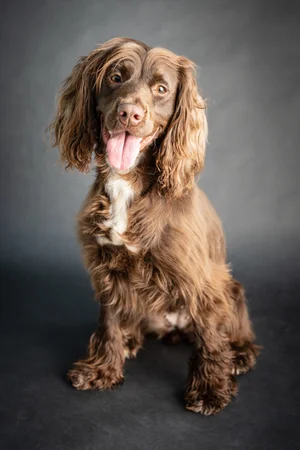
Drift Comes Home. Why Day One Looks Quiet on Purpose
Drift came home Saturday. If you watched the video, you will have noticed how little “training” there is in it. That is on purpose.
This project is about showing how I actually work with dogs in real life, not how training looks when everything is tidy and controlled. The early days with a puppy matter, but not because you need to get ahead or start ticking boxes. They matter because this is when dogs learn how new places feel.
A bit of context on me and why I work this way.
I am an ABTC registered animal training instructor and an accredited gundog training instructor. Most people who come to me are not stuck because their dog does not know how to sit. They are stuck because everyday life feels hard. The dog is switched on all the time. The house feels busy. Things tip over quickly.
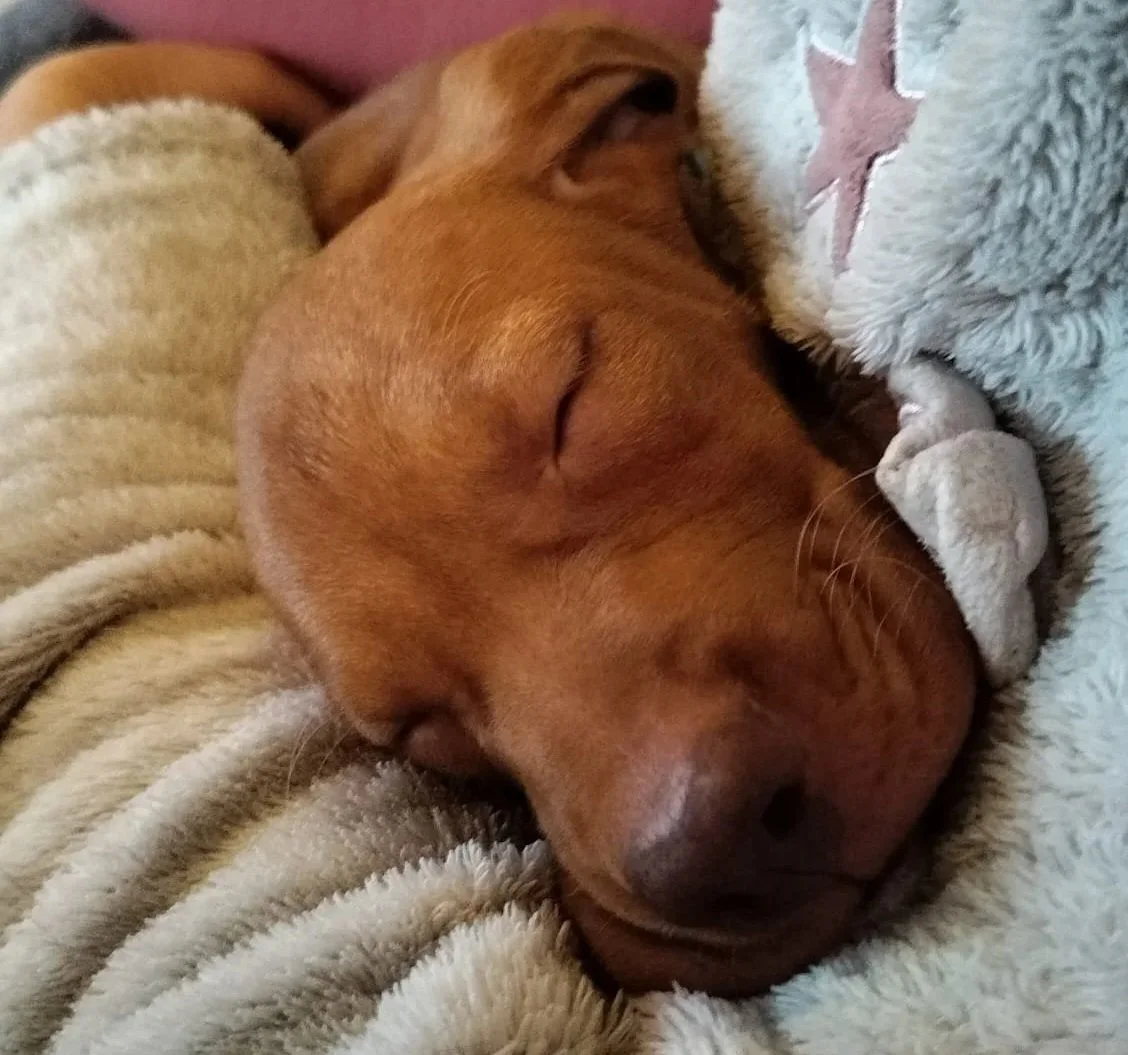
Drift asleep
You see a lot online about training puppies. How to fix them. How to get the perfect puppy. The message is often that there is a right method or a magic formula and once you find it, everything clicks and the problems disappear. If it has not worked yet, it must be because you have not found the right video, the right programme, the right influencer.
That framing does not help most people.
Dogs are not machines you set up once and then run on the same settings forever. They are individuals. What they can cope with changes day to day and sometimes hour to hour. Energy levels change. Confidence wobbles. Life happens around them. Working with dogs means adjusting to the dog you have in front of you in that moment, not chasing an ideal version of how training is meant to look.
We also do not exist in a bubble as caregivers. How we feel shows up in how we handle our dogs. A bad night of sleep, work deadlines, stress, or just being worn thin can change our patience. You know how it goes. When you are already on edge, even something small like catching your sleeve on a door handle can feel like the last straw. Dogs feel those shifts in us, even when we are trying not to show it.
Every living thing is shaped by the environment it is in and what is happening around it. That environment is not fixed. It changes across the day, across the week, and across seasons of life. So when a dog has an off day, it is not random. It is information about what the whole picture looks like in that moment.
So I pay a lot of attention to how dogs cope with change. New places, new people, new routines. Stress is part of life for dogs, just like it is for us. What matters is not avoiding it, but whether the dog can come back down again after something new. That is what I am watching for on day one.
You will see a few things come up again and again in this project.
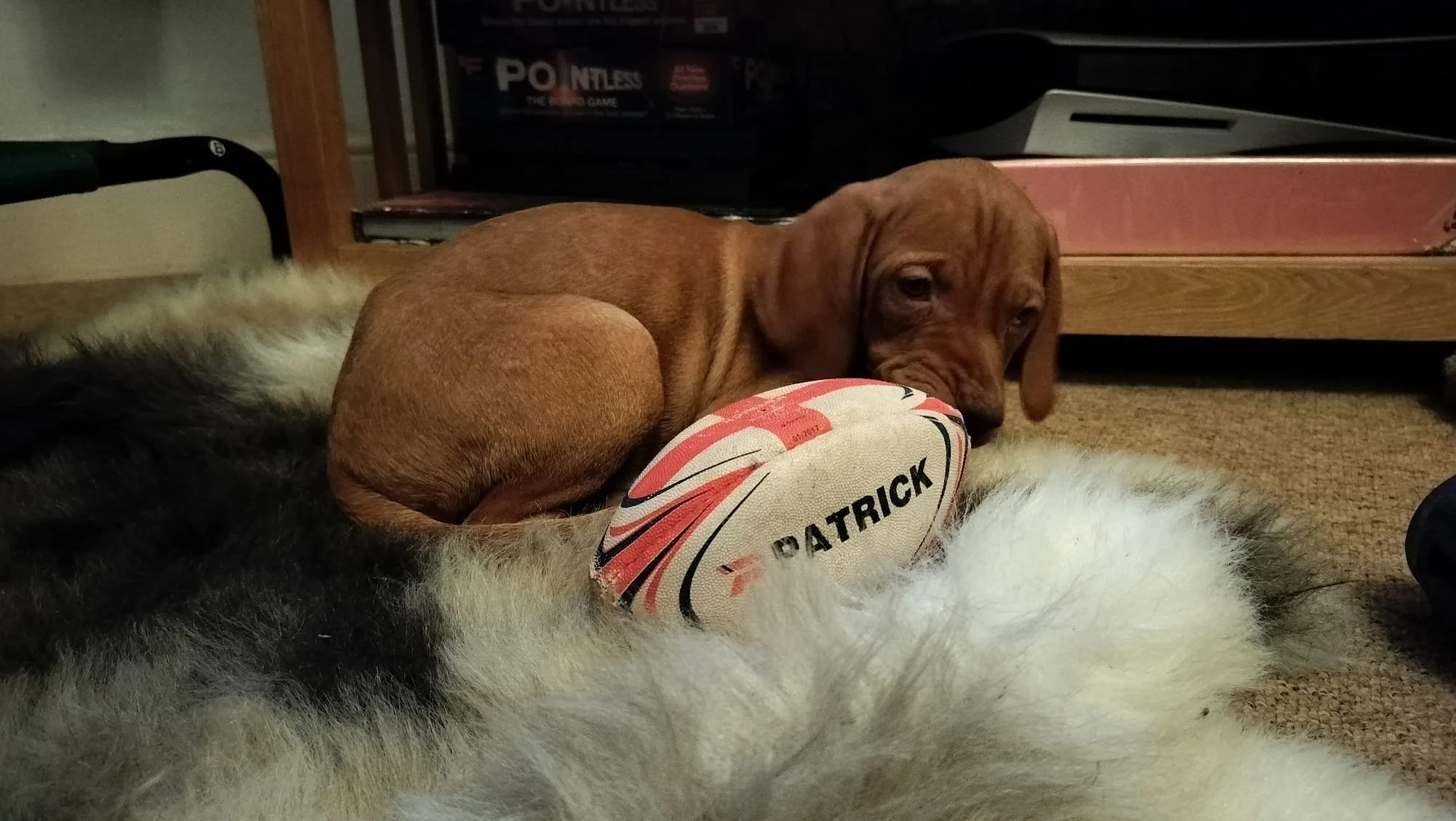
Drift and a rugby ball
I keep early days small and predictable. Not because puppies are fragile, but because they learn from whatever they get to practise. If the first things they practise are rushing around and being overwhelmed, that becomes familiar fast. If the first things they practise are settling and pausing, that becomes easier to return to later.
I manage the environment rather than trying to fix behaviour in the moment. That is why the house is set up with clear spaces, short interactions with the other dogs, and lots of downtime. It is easier for a puppy to make a good choice when the setup is kind. That is not being soft. It is being practical.
I build behaviour by noticing and reinforcing what the dog offers, rather than telling them what to do all the time. That will show up more as Drift grows, but it starts here. I am watching what she finds easy, what she finds hard, and how quickly she can settle again when something changes.
Drift is not coming into an empty home. There are two adult dogs and a cat here already. That matters. Early boundaries are not about stopping interaction. They are about protecting everyone’s space so no one feels the need to manage the situation themselves. Puppies do not need to be corrected by other animals to learn. They need adults to set things up so early experiences stay neutral.
Why a working bred gundog puppy.
Drift is from working lines. That does not mean she needs to be trained harder. It means she is likely to have a busy brain and body. Dogs bred to work tend to notice more, move more and struggle more with switching off. That is not a problem. It just means calm and recovery need to be built in early, not bolted on later.
Why I am sharing this publicly.
Most people only see the end results of training. The dog that looks settled. The dog that can cope in busy places. What you do not see are the quiet decisions that got them there. The stopping early. The choosing not to push. The small changes in setup when something feels like too much.
I am not doing this to show a perfect process. I will get things wrong. I will change my mind. That is part of working with the dog in front of you rather than following a fixed plan.
If you are raising a puppy and everyday life feels harder than you expected, you are not failing. Most people are just trying to do too much, too soon.
Day one is not about progress.
It is about arrival.
Everything else builds from there.
YouTube thumbnail image of video one from The Dog In Front Of You
People who shaped how I work
The way I work with dogs now did not appear fully formed. It has been shaped over time by trainers, educators and colleagues who have challenged my assumptions and helped me see dogs more clearly.
Some of that learning has been technical. A better understanding of how dogs learn, how timing and setup matter, and how small changes in environment can shift behaviour. Some of it has been more uncomfortable. Being willing to question habits I was taught early on. Being honest about when something I was doing was more about control than clarity.
The biggest shift for me has been moving away from trying to fit dogs into a method and towards working with the dog in front of me. That came from watching other people work thoughtfully, listening to people who were willing to say I do not know yet, and paying attention to the dogs who told me when something was not working for them.
None of this work happens in isolation. The dogs teach me a lot. So do the people I learn from.
This list is not exhaustive and I continue to learn everyday
Helen Phillips at Clicker Gundog
Jules Morgan at Teach Your Gundog
Matt Donovan at South West Dog Skills
The many wonderful members of the Pet Professional Guild and Dognostics
Jenifer A Zeligs at Animal Training & Research International Center
Grisha Stewart at Grisha Stewart Academy - Empowering Animals
Karolina Westlund at ILLIS Animal Behaviour Courses
James French at Trust Technique
plus many many more including Rebecca Stickland, Lynsey Moss, Becky Oldfield and Leanne Taylor.